Today’s headlines are filled with talk about inflation and rising prices. Although the recent Consumer Price Index reporting has showed a slight curve in trend, businesses will continue to deal with the balancing act of absorbing cost increases while retaining employees.
The cost of labor and benefits continues to rise, putting pressure on buyers to perform more in-depth reviews of these cost items pre-closing, and to have a thoughtful post-closing plan to tackle any issues found.
Health insurance market
The cost of health insurance saw an uptick as 2023 drew near. The average increase for fully insured plans, with no plan design changes, ranges from 6% to 8%, year-over-year, according to the Society for Human Resource Management and the Kaiser Family Foundation. That’s a full percent higher than increases experienced a year earlier.
The increases are due to myriad factors. Over the previous 24 months, the pandemic hindered members’ ability to see health care providers for procedures deemed non-essential and, while claims reduced during the lockdown, they rapidly bounced back once providers’ doors re-opened.
Further, the severity of claims increased. Many conditions worsened over the period when users were unable to see providers in-person. Claims data experiences a lag in reporting, and we expect the increase in claims trend to continue into 2023.
Providers are also putting more pressure on insurance carriers during contract negotiations, particularly regarding provider reimbursements. All indications show that it will cost carriers more in the future to maintain their relationships with hospital systems. Those increases will be felt by consumers in the upcoming years, including the most recent fully insured renewals released on Jan. 1.
How buyers can adapt
Buyers should be cognizant of market trends when looking at a target during due diligence and include assumptions based on trends when developing proforma financials to gain a more accurate picture of the ongoing cost of insurance. To combat the trend, buyers can work with their benefits/risk adviser to analyze current benefit plan designs, costs and claims data (if available) during due diligence and determine options to control costs and flatten the curve.
A few options that have been successful.
• Introduce self-insured plans or hybrid-funded plans (including HRA wrap plans) to reduce fixed costs while taking on some additional variable liability. Self-insuring a plan enables buyers to carve out prescription drug or disease management, giving employers more control over their costs.
• Educate employees on lower-cost provider options, such as telemedicine and virtual visits when appropriate. Additionally, direct primary care or a narrower provider network are available options. Advisers can determine the adequacy of such options through a provider disruption analysis. Any of these options directly impacts claims, thus mitigating the impact of trend.
• Education and engagement can also be used as a retention tool, specifically after an ownership transition, easing the integration process. Employees tend to respond well when given more education around their benefits, which reinforces a positive company culture.
The role of human capital
Employees are the primary drivers of a business, but they are also a leading expense. Identifying key employees and understanding processes to hire, retain and ensure employees reach their potential are all imperative to successful transactions.
An evaluation of internal processes to assess benefits and compensation, as well as compliance, should be a consistent practice for businesses. The stress on businesses to provide competitive compensation and benefits packages to their employees persists and will continue to play a factor in keeping key employees and improving retention, specifically through a transition of ownership.
Human resources and human capital due diligence assess the value of a population or employee base of a target and will assist a buyer in identifying key employees as well as any red flags or shortcomings in terms of their processes. An HR advisory team can also review targets for discrimination or compliance issues among employees and identify employees who are pertinent to the business continuing on a consistent trajectory. Alternatively, an HR due diligence adviser can help a buyer identify areas where additional employees may be needed moving forward.
Buyers can also use an HR due diligence adviser to assist in creating a change management strategy during closing and post-closing planning. Change management involves communicating with groups of employees to ease the transition process and reduce anxieties employees may feel upon the completion of a transaction. During their post-closing planning, change management can be a great tool for buyers to use to obtain a consensus among employees on where meaningful improvements can be made. This will increase the goodwill among employees.
Brian Stovsky is the private equity business development leader at Oswald Companies. Contact him at 216-777-6114 or bstovsky@oswaldcompanies.com.
CLEVELAND, March 25, 2024 – Brian Stovsky, vice president and business development leader in the Private Equity practice at Oswald Companies, has been named a 2024
Break Out Award winner by Business Insurance magazine. The annual program honors top professionals who are on track to become the next leaders in the risk management and property and casualty insurance field.Stovsky is one of only 30 professionals across the country to receive this recognition, lauded for his leadership, client service skills and accomplishments.”In his seven years in the insurance industry, Brian has stood out amongst his peers for his ability to lead and his hands-on approach with each of his clients,” said Oswald Chairman and CEO
Robert Klonk. “He continuously demonstrates his ability to work closely with clients to provide the protection they need and guides his team to success every year.”Brian Stovsky began his career in finance but a meeting with a mentor piqued his interest in insurance as a vocation. “Where I was able to succeed early was the fact that I had some transactional and M&A experience, and I had a network,” he said.What’s the current state of your sector of the insurance market?Demand is down because deals are down. It’s more expensive to borrow money, therefore it’s more expensive to buy companies. Coverages are not written as often because the deal volume is down, at least in the segment of the market that we operate in.How do you use, or think you’ll use, AI in your job?Hospital systems and providers have never been great at billing. So, if there’s a system where AI could help those claims and make sure there’s no duplicate billing, that would seemingly be a very good use of AI.What’s a problem that needs fixing in your sector?There’s little transparency right now; there’s a serious disconnect between the profits that insurance companies are posting and the rates that my clients are seeing.Favorite family tradition?We’re a Jewish family so every holiday we have the entire family (over). Not only family but friends who are family. My family considers a lot of people family. So our Passover seder was 40 people. My favorite traditions are just inviting anybody who needs a place to go.What is something about you that would surprise people?We love musicals. I’m a finance bro, but deep down I love theater and the arts.What did you want to be when you grew up?Easy. I wanted to be a professional hockey player. I played hockey my whole life, from the time I was 2 through college. Full link: Business Insurance Magazine Break Out Awards
Investors and portfolio companies, particularly acquisitive middle-market and lower-middle-market firms, have different challenges than in years past. Volatile market conditions, higher debt costs and competitive acquisition markets have made management teams rethink their growth and retention strategies.
In many cases, these strategies start and end with quality people.
Manage, retain, and attract top talent
Workforce issues can derail a deal and hinder the growth of an organization. So why are human resources teams often overlooked during the deal process or when discussing strategic initiatives?
Among other things, building a resilient mergers and acquisitions-oriented business starts with hiring or retaining quality people and seasoned management teams. Resilient businesses require a management team that can lead during chaotic and challenging periods, align with company culture and motivate their workforce.
There is no better time than now to review your current process around managing, retaining and attracting quality talent and discussing what a successful process looks like.
Use a benefits and human resources advisory team
In many instances, bootstrapped and family-owned-middle and lower-middle-market companies have understaffed and inexperienced human resources teams, specifically regarding mergers and acquisitions.
Private equity firms and their portfolio companies should lean on their advisers to perform many of the critical reviews and benchmarking necessary analyses. This will ensure their compensation and benefits package is competitive with their peers based on size, industry and region.
Services such as wage analyses, benchmarking of employee benefits and retirement plans, deferred compensation plans, key person life insurance, employee assistance programs and virtual advocacy tools are among the many things that today’s workforce expect.
Additionally, when selecting a management team, consider their experience with acquisitions and how that can improve integration and workforce management processes.
Protect your management team and the company
Once the management team is in place, it is pertinent to protect the team by mitigating risks and liabilities that fiduciaries of the business can face. A comprehensive executive risk/management liability program should be in place to protect a company’s leadership teams from personal liability caused by a professional decision or action. These programs traditionally include directors & officers (D&O) liability, employment practices liability (EPL), fiduciary liability and crime coverages.
Workforce issues can derail a deal and hinder the growth of an organization.
Further, errors and omissions policies (professional liability) can protect companies from legal fees in the event of a lawsuit claiming that a business was negligent, made a mistake or performed inadequate work. Such policies help create a resilient business over time.
Properly perform due diligence on a target
Another key part of building a successful portfolio company is to compile a great core due diligence team surrounding potential add-on acquisitions.
Accurately assess the inherited costs of the target, identify any synergies between platform and add-on and calculate future costs caused by the integration. Human capital strategy, employee benefits plans, retirement and defined benefit plans, executive benefits and buy/sell policies, and commercial insurance program reviews should all be considered during due diligence.
Protect buyers and sellers through Representations and Warranties insurance
Build a resilient business by protecting the organization from material misstatements or breaches of the purchase agreement post-closing through Representations and Warranties Insurance (RWI).
Traditionally, RWI protects a buyer from any breaches in seller representations as reflected in the purchase agreement. The policy will cover indemnity from seller breaches of the contract. Limits are often set at 10%-15% of enterprise value, deductibles (retention) are typically .6%-.9% of enterprise value, and premiums generally range from 2.4%-2.7% of policy limits. Retention is often split 50/50 between buyer and seller; however, we are seeing more deals structured with little to no seller indemnity in the RWI policy.
The placement of RWI has become a widely adopted practice in private equity transactions. It is a unique advantage to have a benefits and risk adviser that can also place RWI, as the RWI adviser will have a direct line of sight into the due diligence that drives the RWI underwriting and consideration of exclusions to the policy.
For divestitures in the lower-middle market, there is sell-side Representations and Warranties insurance, limiting the liability of the seller post-closing. This provides coverage for defense costs that may arise from the claim of breaches asserted by the buyer or a third party and can provide up to a specified percentage of the enterprise value to pay indemnity to the buyer if there is a breach.
Brian Stovsky is the business development leader of M&A / Private Equity at Oswald Companies. Contact him at 216-970-8622 or bstovsky@oswaldcompanies.com.
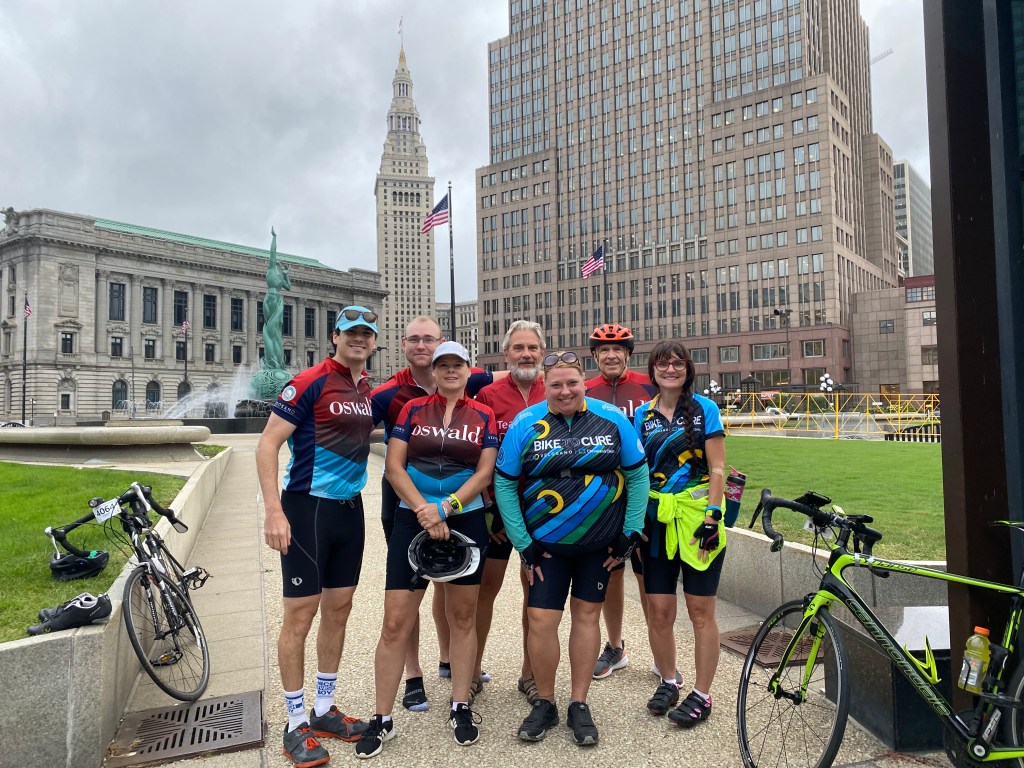
Latin for “swift cure”, VeloSano connects the cancer community with Cleveland Clinic’s expanding global impact in research, innovation and care. This unique partnership ensures an accelerated path to finding cures by making good on our promise – that one hundred percent of every dollar raised for VeloSano initiatives will support transformative, lifesaving cancer research happening at Cleveland Clinic today, in order to impact the lives of millions of people around the world, tomorrow.
What began as a weekend-long bike ride in Cleveland has become the link that connects philanthropy to research, research to patients, and patients to cures. Gifts to date have resulted in innovative treatment, therapies and – perhaps most importantly – comfort to patients across a wide range of cancer specialties. What we learn through research in one area adds translational knowledge to the overall field of cancer research and ultimately puts us one step closer to a cure.
Today, more than a decade after its founding, VeloSano remains committed to realizing the potential of individuals and communities with a single like-minded passion: ending cancer. Together, we are VeloSano. Together, to cure cancer.
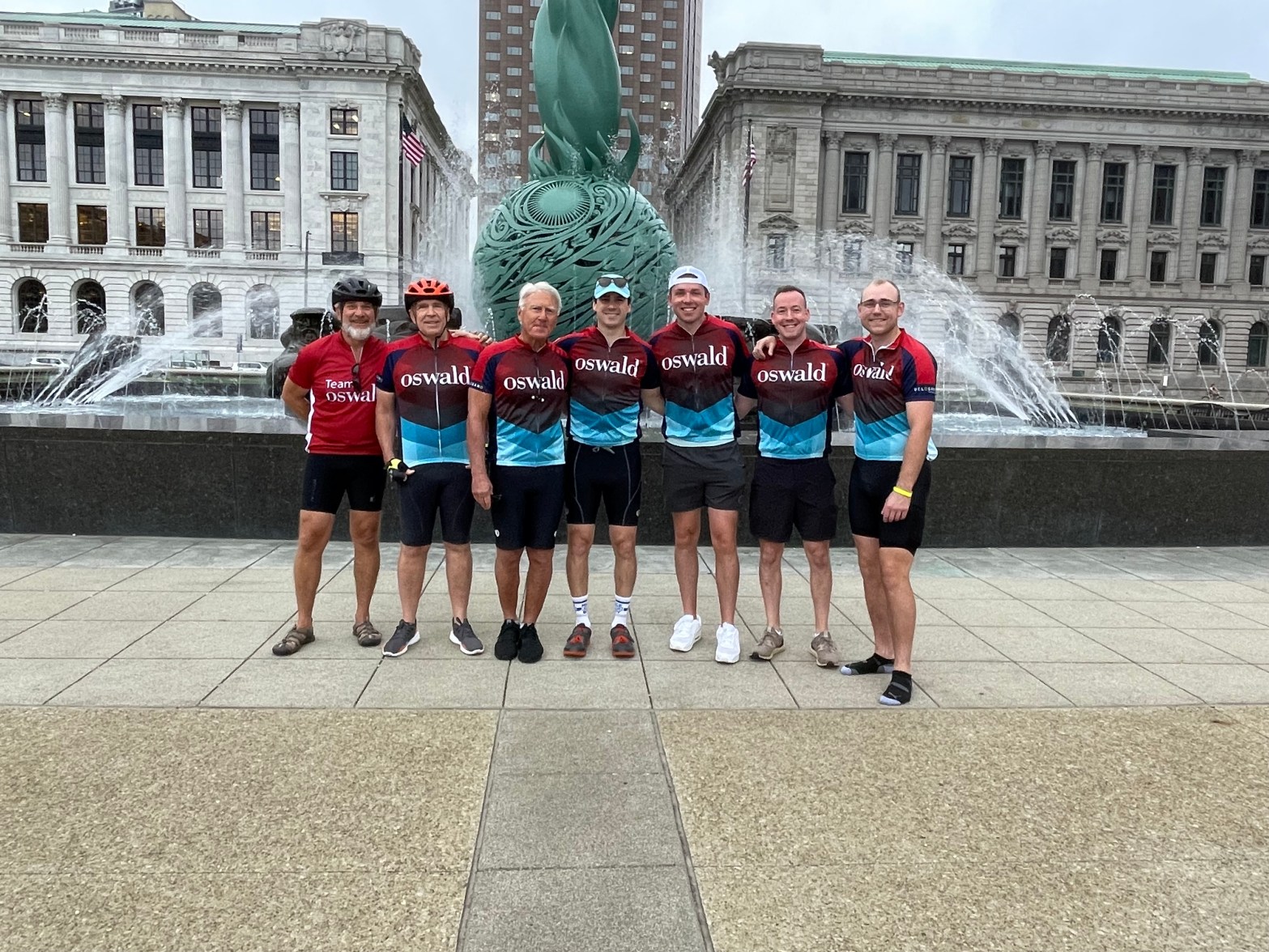
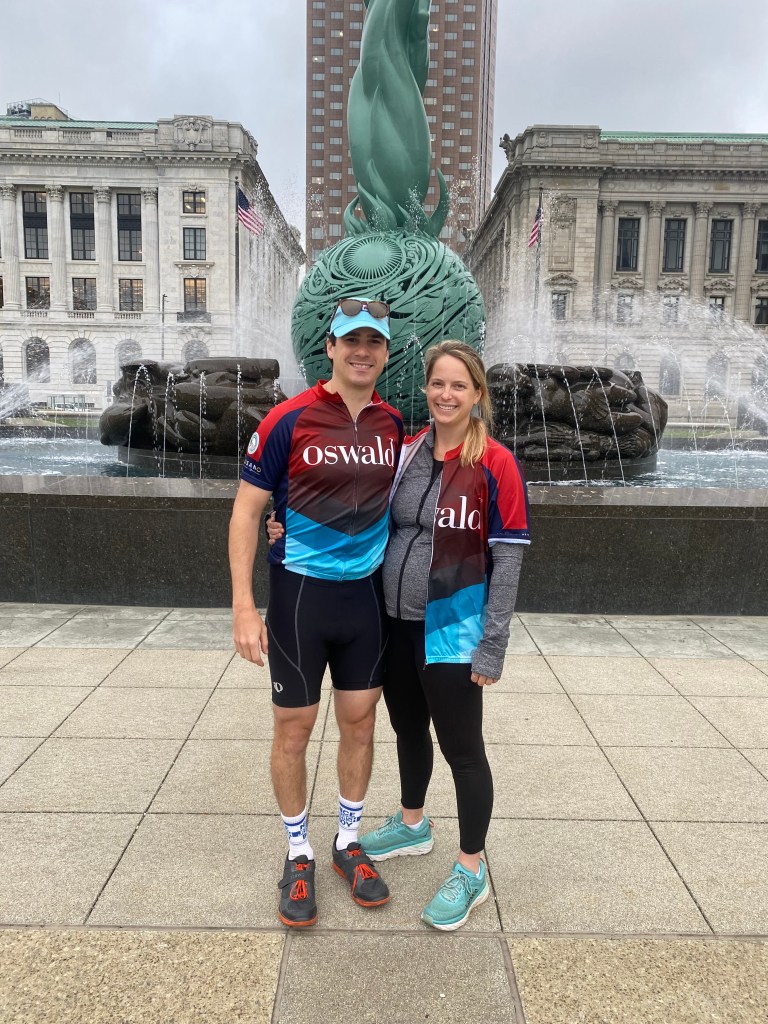
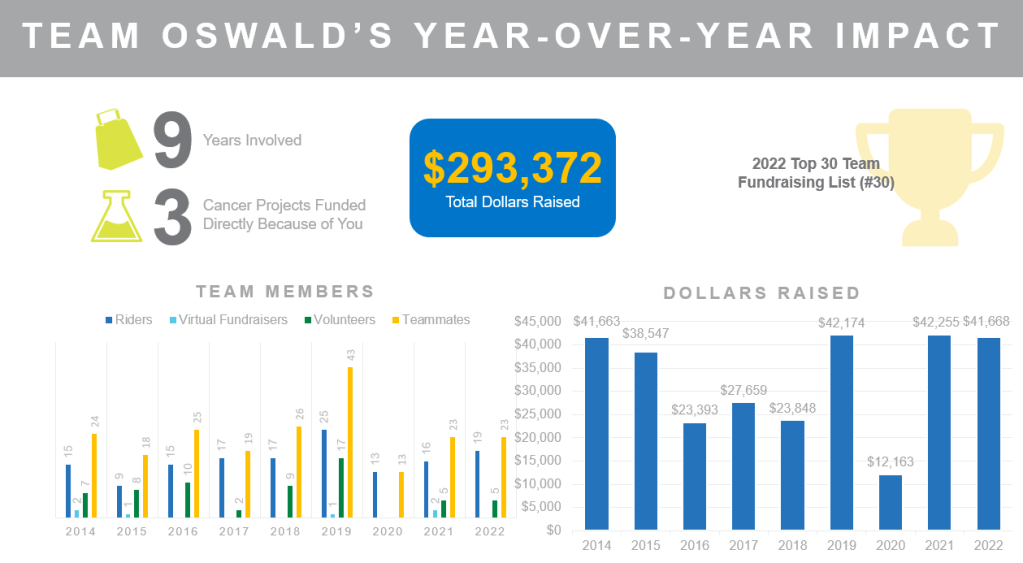
Oswald Companies has been a Velosano participant for 10 years, since Velosano was founded. We have raised a combined $293,372 in the previous 9 years of participation and will continue to raise funds in 2023 and beyond.
See below for our year-over-year impact report:
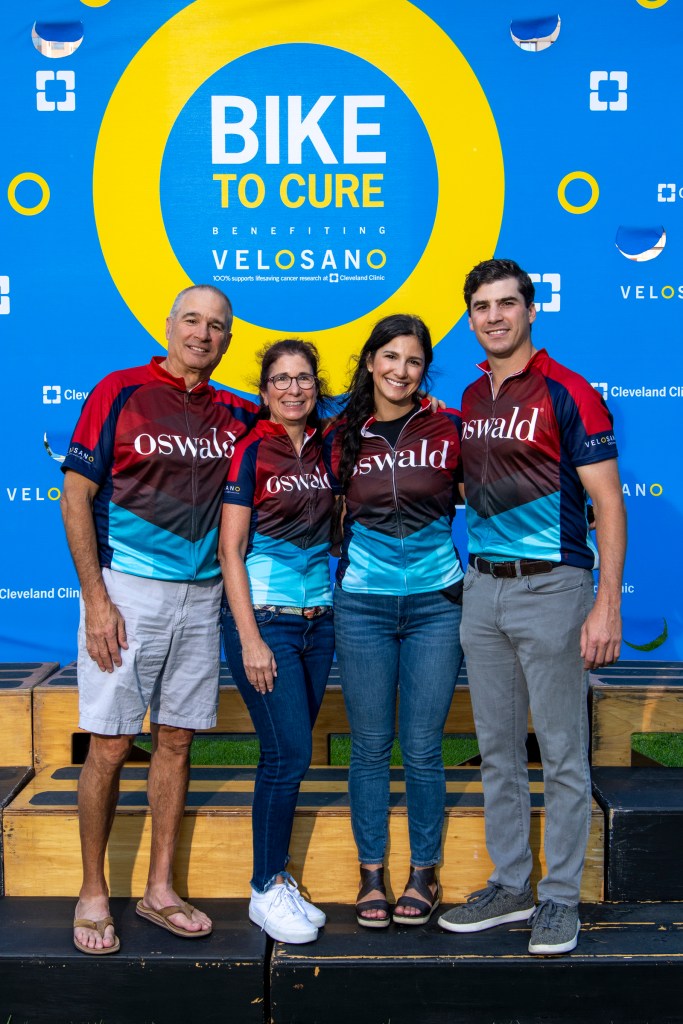
Brian Stovsky is the Oswald team captain and has been in charge of leading the fundraising efforts.
The AM&AA’s primary goals are to help members improve their level of knowledge, give them access to the tools to help them better market and deliver their services, and provide them with a network of knowledgeable professionals with whom they can share information and resources.
An AM&AA chapter is a local resource for networking, education, marketing, developing professional opportunities, and thought leadership. Members are able to make face to face connections with each other, potential members and other opportunities.
Founded in 1893, Cleveland-based and employee-owned, Oswald is one of the nation’s largest independent insurance brokerage and risk management firms. As a proud partner of Assurex Global, the world’s largest association of privately held insurance brokers, our risk management professionals service and support the needs of our clients worldwide.
Through our eight market locations and family of partner companies, our “One Oswald“ approach helps individuals and businesses identify, reduce and manage their risks through our collaborative business units: property and casualty, employee benefits, personal client management, retirement plan services and life insurance.
Brian Stovsky joined Oswald in 2017, assisting with large group analytics and creating aggregated insurance programs for our clients. He has since evolved into the leader of business development for Oswald’s Private Equity and M&A practice as well as with Oswald’s large group practice.
Richard Stovsky joined Oswald board of directors in 2020, adding to a deep bench of board-level advisors Oswald’s parent company, Unison Risk Advisors, has at their disposal.
Every year, employers stress over the cost of health insurance for employees, but there are some tricks to controlling costs. You have to know what’s driving costs up in the first place – and then figure out how to reign them in.
Maybe your company hasn’t shopped around enough for insurance. In this highly competitive market, cost can be reduced by leveraging carriers against one another. However, the results are often short-lived and are outweighed by bounce-back increases, also known as the whiplash effect. Statistically, one in every five years will be a bad claims year, in which claims spike, leading to a larger increase in costs for the next renewal.
But what if you just focus on having healthier employees? Healthier people lead to lower claims, which lead to a lower loss ratio. That all leads to lower cost for renewals for the company.
Could it be that simple? With a little motivation by the employer, yes!
How to make your population healthier
Employers can urge employees to live a healthier lifestyle through incentive programs involving compensation and benefits. This could include smaller payroll deductions for health insurance, gift cards or a contribution to the employee’s HSA if employees complete wellness goals such as an annual physical, exercising or quitting smoking.
Employees not only feel better physically, but they can feel good about saving money on health insurance and facing an individual or team challenge. The company, in turn, has fewer insurance claims in the future.
For example, if an employee controls high blood pressure earlier because the issue was found during an annual physical, a future heart attack may be avoided. Heart attacks can turn into a six or seven digit claim that a company would absorb through higher premium payments, which could be avoided through medical maintenance. This is a way of controlling costs without relying on market conditions.
Just Ask
No company should go down this path alone and unprepared. Tap into your resources.
Health insurance carriers want a healthy bottom line, so it helps to have lower claims. While a fully insured company may absorb claims through future premium increases, the carriers need to front the bill, which can be expensive.
Most carriers have an arsenal of resources available to those under their coverage. In some cases, carrier mobile apps are built with artificial intelligence to give tips to users based on their health history, medical and prescription claims data. Additionally, in leu of premium reductions, many carriers offer wellness dollars for their clients to pay for wellness initiatives, such as a Fitbit, wellness vendors and wellness technology). All you need to do is ask.
It pays to know people
Brokers are the intermediary between the company and the carriers; an advocate for their clients. In addition to being able to obtain credits for wellness, many brokers have access to resources through broker/vendor relationships. Oswald has a longstanding relationship with PeopleOne Health, our primary wellness consultant group. At minimal cost, our teams will come onsite and perform wellness consultations, host wellness fairs, introduce wellness challenges and offer technology to track the status of employees’ wellness initiatives.
Weighing your options
Employers also must consider how insurance is funded. Should the company be fully insured or self-insured? The answer depends on how much risk you’re willing to assume up front and how much you want to gamble.
Fully insured is when the company pays the carrier higher premiums up front and, in return, the carrier offers access to their network, takes on full responsibility of the payment for claims, administration of claims and retention costs. Cost increases or decreases mainly come in the form of annual renewals, based on loss ratio.
Self-insuring is a little more complicated. This is when the company assumes responsibility of claims up to a specific dollar amount per person. It pays a third-party administrator to handle the claims, provides a maximum annual spend limit and pays a carrier for access to their network. The company is betting on itself by paying lower premiums but taking on the burden of claims payment. Typically, groups under 100 employees enrolled will not self-insure because the pool of employees is too small to justify taking on the risk of claims. A handful of high claimants can have too detrimental of an impact to the risk pool. As the group grows, self-insurance can become a more viable option.
In recent years, middle ground solutions have come to light. For instance, buying a higher-deductible, fully insured plan has the company cover a portion of the employee’s deductible through a Health Reimbursement Arrangement (HRA). This strategy offers the company another way to bet on itself somewhat by taking on part of the deductible liability, while still maintaining a fully insured plan and capping their risk. The higher deductible offers a lower premium option as well. So, if the company takes on more risk, upfront costs can go down. Of course, strategies to keep your employees healthy will certainly be a bonus. Level-funding or hybrid-funding is another way to share more of the risk with the carrier to try and reduce cost.
All these choices can be overwhelming to a company – but it doesn’t have to be. With our expertise in health insurance and employee benefits, Oswald works with our clients to help them make informed decisions. We make the process easier by backing it up with data, analysis, and market information. We serve over 2,000 clients nationally and are among the largest privately held, employee-owned and independent brokerages in the country. https://www.oswaldcompanies.com/media-center/healthier-employees-lower-costs-could-it-really-be-that-simple/
The Empower Sports Thru the Zoo 5k is back! Returning this year will be the breakfast, snacks and open bar at the finish line, prizes for top finishers, and event t-shirts for all attendees. But this year’s course is a verified FULL 5k course managed by Hermes.
Funds raised will directly benefit Empower Sports programs for athletes with disabilities.

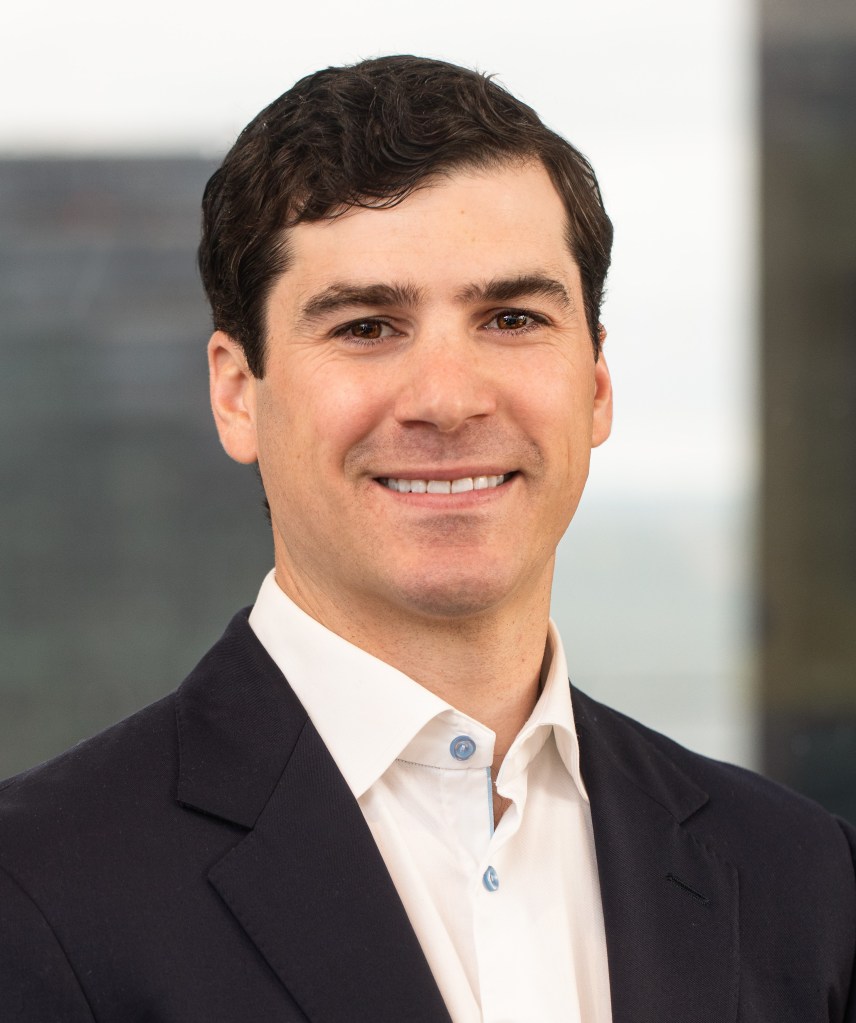





 Brian Stovsky